
BECHTSINARI
December 10, 2024 · Arcus Real Estate
A LOST GARDEN AND A FORGOTTEN PLACE
"Bechtsinari" is the name of the area located between the 3rd and 4th piers of the port, at the level of the Axios Gate. The word derives from the Turkish beş çınar, meaning "five plane trees".
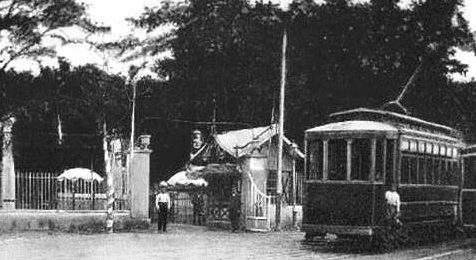
The inspiration for and creation of the park belongs to Vali Sabri Pasha, who in 1836, making use of the natural beauty of the area, designed a national garden that exceeded every expectation by the standards of the time. The walking paths among trees and plants created a paradisiacal setting that enchanted the era's distinguished guests, while there were rich recreational facilities, such as a large amusement park with all manner of swings and seesaws, where young and old alike had fun.
In the park, hospitality and service establishments gradually developed, such as inns and taverns, which attracted Thessaloniki's high society, since the park was connected to the horse-drawn tram of the era, which started from the Depot and ended at the entrance to the park.
It soon became a magnet for visitors from other areas as well, with the inns constantly full of people who wanted to experience first-hand the glamour of the city's high-society life. During the summer months, bathers packed the famous beach to capacity for swimming, with facilities reflecting a different culture and morality. For the beach was divided into men's and women's sections, with two large cabins on each side and at a great distance from one another, while a coast-guard boat patrolled between the two sides to safeguard morality and order. Of course, there were also the daring ones, who would approach the women's beach and, following the women's cries, would be apprehended by the coast guard.
It is also worth noting that the women's side had a platform with a trapdoor and a ladder so that the female bathers could descend for swimming always in the shade and maintain their snow-white complexion, as the fashion and standards of female beauty of the era demanded.
After the liberation of the city in 1913, the national park was renamed the "Garden of the Princes" in honour of the children of the royal family of George I, who had settled in Thessaloniki from October 1912.
"NOTHING TODAY RECALLS THE PARADISE OF ANOTHER ERA, THE BEXINARI WITH ITS FINE SHORELINE THAT THE GREAT VASILIS TSITSANIS PRAISED IN HIS VERSES."
Nevertheless, the development of high-society life towards the east of the city, shortly before the Second World War, gradually began to erode the glamour of the national garden. The wider area began to attract industrial units, and along its coastal section the port's installations expanded, resulting in the erection of large oil-storage tanks. The end was marked by the German Occupation, which turned the area into storage spaces for war materiel.
In the post-war period, the national garden was completely destroyed by the unregulated and rapid development of small-scale industrial units, mainly tanneries, with tragic consequences for the natural environment and the microclimate of the area. As a result, the area bears no resemblance to the paradise of that era, the "Bexinari with its fine shoreline" that the great Vasilis Tsitsanis praised in his verses, and it now survives only as a landscape in old photographs.
Today, "Bechtsinari", prompted by the decision to erect the Jewish Holocaust Museum and an ambitious plan to redevelop the area, is once again reclaiming its lost glamour. Indeed, according to those in charge, this project will create a new powerful landmark, which is expected to attract more than 500,000 visitors every year.
A project of major importance and symbolism, with construction beginning in 2024 and concluding in 2026. A museum of remembrance for the extermination of the city's Jewish community, on the very spot from where the trains of death departed towards the concentration camps. This project is co-financed by the German government, the Greek state and the Stavros Niarchos Foundation, while a donation is also being made by Mr Albert Bourla, CEO of PFIZER. The architectural study provides for an octagonal building extending across 6 above-ground floors and 2 underground levels. At the same time, it will be surrounded by a small urban forest, with the aim of transforming the wider area into a modern metropolitan park, as well as a living monument of history and culture.