

Articles
The 15-minute city: The model redefining real estate
November 19, 2026 · Arcus Real Estate · 3 min read
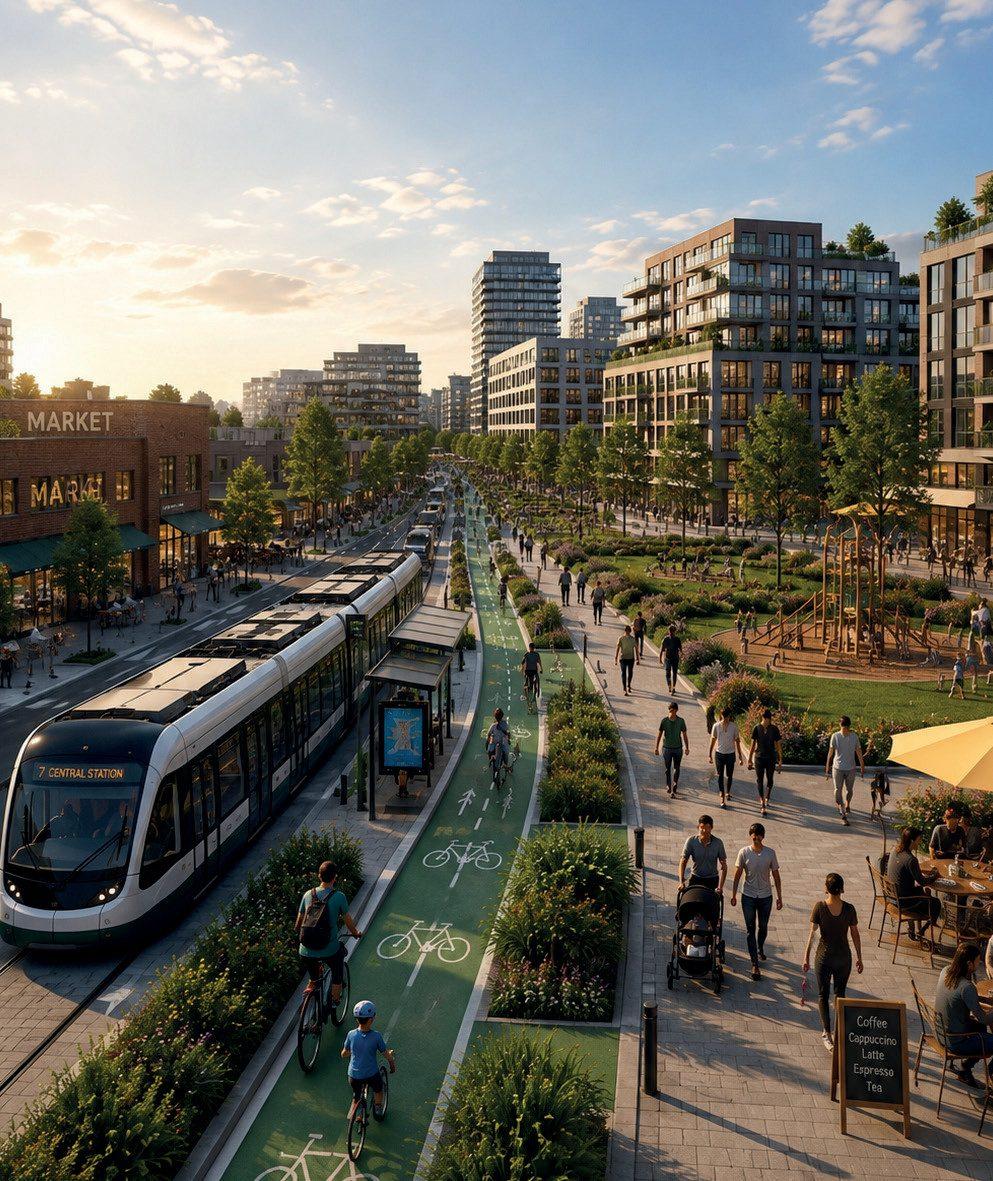
The value of a property is no longer determined solely by its square metres. It is increasingly determined by the quality of the neighbourhood, accessibility and the experience of everyday life.
A new philosophy for the cities of the future
The "15-Minute City" model is one of the most important contemporary trends in urban planning and urban development.
It was formulated in 2016 by the French architect and urban planner Carlos Moreno and became more widely known through its implementation in Paris in recent years.
Its philosophy is based on creating cities in which residents can meet the basic needs of their daily lives within fifteen minutes of their home, either on foot or by bicycle.
It is an approach that puts people back at the centre of urban planning, reducing dependence on the car, strengthening local communities and improving quality of life.
What does the "15-Minute City" mean in practice?
The core idea is simple but highly meaningful: residents should not need long daily journeys to meet their basic needs.
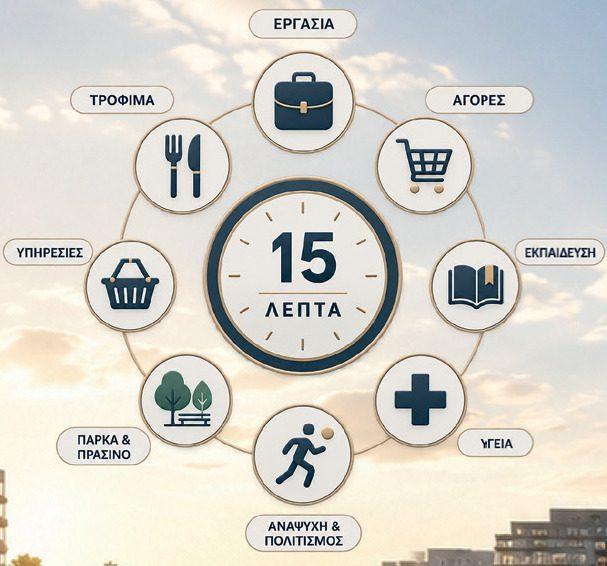
Each neighbourhood is organised as a complete urban core that offers easy access to:
- schools,
- health services,
- local shops,
- workplaces,
- parks and green spaces,
- cultural and sporting activities,
- public transport.
In this approach, the notion of proximity becomes more important than the notion of speed.
Why real estate is changing
This new philosophy is already having a significant effect on property values and investment strategies all over the world.
Today, the value of a property is not determined exclusively by its own characteristics, but increasingly by the quality of the environment in which it is located.
Proximity to:
- metro stations,
- schools,
- parks,
- retail and commercial uses,
- leisure facilities,
- workplaces,
- cycle lanes,
- public services,
is now a significant investment advantage. Buyers are not simply looking for a home. They are looking for a complete neighbourhood that offers quality of life.
The Greek reality
In Greece, the philosophy of the 15-Minute City is still at an early stage.
Nevertheless, several areas already display characteristics of this approach.
Neighbourhoods with:
- mixed uses,
- vibrant commercial activity,
- easy access to public transport,
- a strong local identity,
- high-quality public spaces,
are steadily gaining ground both in the housing market and in investment.
In Thessaloniki, parts of the historic centre as well as newly developing urban cores are redefining the relationship between residents and their neighbourhood.
Likewise, in Athens, major urban regeneration projects and the new fixed-track lines are creating the conditions for more functional and sustainable urban areas.
The challenges of the transition
Implementing this model requires:
- modern urban planning,
- upgraded public spaces,
- more green spaces,
- strong public transport,
- digital services,
- smart infrastructure.
The transition is not only about getting around. It is about a different way of life.
The future of cities has already begun
The 15-Minute City is no longer a theoretical planning idea.
It is gradually evolving into a new design standard, influencing the way cities develop, properties are valued and investment strategies are shaped.
Perhaps, in the end, the real value of a property lies not only in its address.
But in the quality of life it can offer people, within just fifteen minutes of their front door.
Sources
- Encyclopaedia Britannica – 15-minute city
- Nature – The ‘15-Minute City’ concept can shape a net-zero urban future
- MDPI – Unpacking the 15-Minute City via 6G, IoT and Digital Twins
- MDPI – Urban Planning in the 15-Minute City
- PMC – The case study within a neighbourhood of Thessaloniki
- Reuters – The two-wheeled revolution transforming urban living
- The Guardian – Why has the 15-minute city taken off in Paris?
- Wired – It’s finally time for the 15-minute neighbourhood