
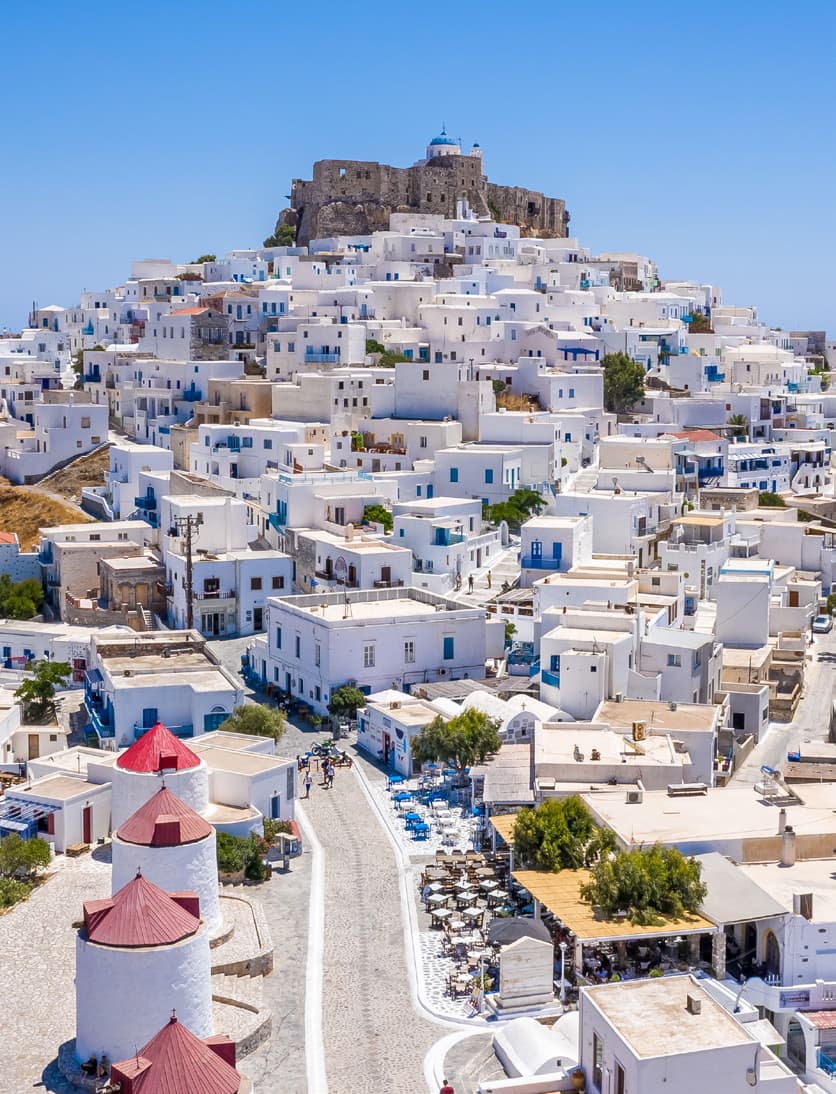
INTERVIEW WITH THE MAYOR OF ASTYPALAIA
October 10, 2024 · Arcus Real Estate
– What changes have taken place on the island, which problems remain and what are your priorities?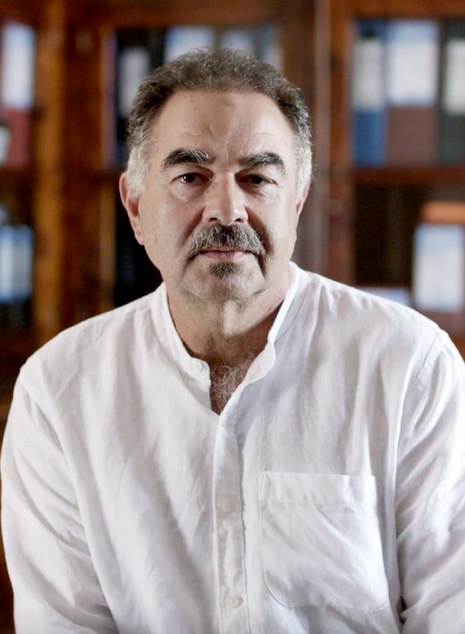
1. The broader changes are those related to the identity shaping our island as a place of genuine sustainable development, one that will care for the environment and make use of new technologies in order to eliminate the harmful impact of human activities of every kind.
This is why our municipality is taking part in the "Astypalaia: Smart and Sustainable Island" programme, which provides for the comprehensive electrification of all urban transport vehicles with electric vans and a hybrid power-generation station drawing on alternative energy sources, so that Astypalaia becomes a zero-emission (CO2) island. Among the initiatives that have been carried out and are being implemented at the same time is drinking water from the tap, which our municipality will deliver this year, making it the first small island that will not need bottled water, thereby eliminating the plastic bottle.
At the same time, we are proceeding with a drastic improvement of the road network for the actively used parts of our island.
The next steps are:
A) Redesigning the operation of the wastewater treatment plant so that we can reuse the discharged water for irrigation purposes. The study is already under way.
B) Full recycling of solid waste and composting of organic matter for the production of animal feed and fertiliser.
– Astypalaia is an important green destination that is experiencing rapid development. What is your vision and what steps have been taken recently?
2. Over the past few years Astypalaia has managed to become a particularly important destination, and this is owed to the initiatives we are carrying out on our island, which are unique for their pioneering character and the impact they have on the lives of our residents and visitors and on the environment. Through the "Astypalaia: Smart and Sustainable Island" programme, implemented in cooperation with the Greek state and the VW Group on Astypalaia, we have created new mobility models, both in terms of public transport and private travel. Two mobility services now operate on our island: public urban transport through the Astybus service, and vehicle sharing (cars, mopeds, bicycles) through the Astygo service.
These two services are available to the public through the AstyMove digital app, which users can install and run on their mobile phones. At the same time, significant subsidies have been granted to private individuals to replace their conventional vehicles with electric ones, which has resulted in the island's electric vehicle fleet being the largest relative to the island's population, possibly anywhere in the world.
As you can understand, these new mobility models, which operate to the benefit of both residents and the environment, are unprecedented by Greek standards, thereby giving our island a new character.
The above initiatives concern the first and second pillars of the programme, which consists of four pillars in total. We are now moving on to the third pillar of the programme and the creation of a hybrid electricity-generation station powered by renewable sources, which will cover not only the energy needs of this particular programme but also 80 to 90% of the needs of the entire island of Astypalaia.
Our aim is for our island, through the "Astypalaia: Smart and Sustainable Island" programme, to become an example for other destinations as well, offering solutions not only for small but also for large urban centres.
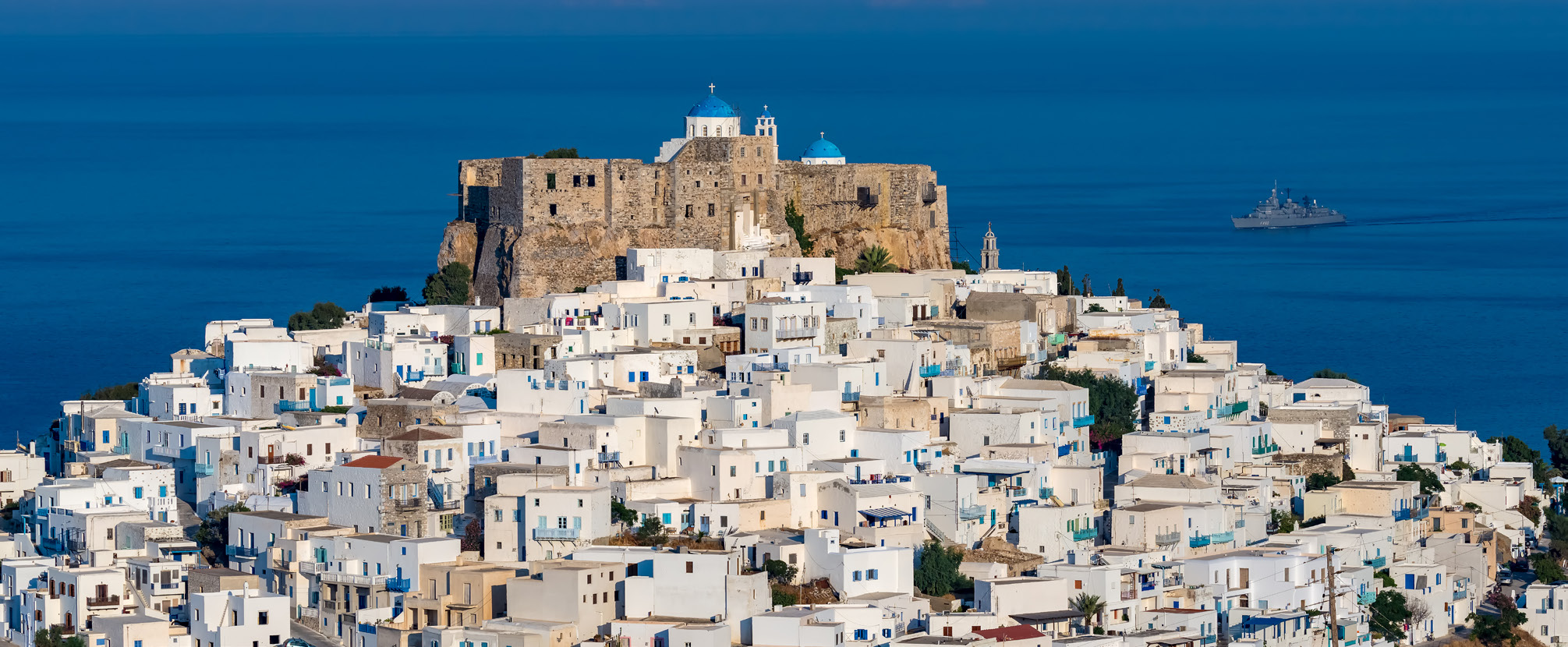
– What is your opinion on the development of tourism in our country? How is it progressing this year in Astypalaia compared with previous years, and how did you fare in terms of occupancy, new accommodations and the arrival of foreign tourists?
3. Astypalaia has shown a steady rise over the past three years, with an extension of the tourist season, following a model that is not one of mass tourism but rather of small, quality accommodations that reproduce the residential model of the island.
I believe neither in large investments nor in out-of-plan development, which destroy the environment and disrupt the balance of the ecosystem. This is the model we must follow, at least we the small islands. Anything else would be catastrophic.
This year, although foreign visitors are coming, the number of Greek visitors appears reduced. As for June, July and August, we will do well, and it seems September will go well too. I detect a general hesitancy that may be due to the elections, to the decline in Greeks' purchasing power and to rising prices in general. A standing request of our islands is the reduction of VAT, which would help enormously to balance out the cost of holidays and above all of travel, so that it is roughly the same as in mainland Greece.
– How do you see the future of the property market on the island, and what actions do you believe must be taken immediately for its optimal development?
4. As for the objective values set in Astypalaia, these are generally unacceptable because they were based on incorrect data and a deficient market survey, a fact admitted by the Prime Minister himself during his visit to the island on 2 June 2022. We are awaiting their drastic correction following the fully documented research and study we carried out as the Municipality of Astypalaia and which we submitted to the relevant directorate.
Alongside this, a problem has also arisen with the forest maps, where essentially all the special areas are treated as forest land, even though they are private or municipal property and on which practically no notarial act (transfer, etc.) can be carried out.
– You lived for many years in Northern Greece. Astypalaia is one of the first choices of Thessalonians and Northern Greeks in general. Why is that?
5. Thessalonians and, more generally, all Northern Greeks are open, spontaneous and, on the whole, more genuine people. They stand out. They make friends more easily and are particularly friendly. Exactly the same is true of the people of Astypalaia. So, beyond the unique beauty of our island, with its traditional settlements, beaches and unspoilt nature, what Thessalonians find is the warmth and directness of the Astypalaians, which makes them feel at home, as if it were their own place.
– What is your favourite spot in Thessaloniki, and which one do you think has not been developed as it should have been?
6. A stroll along the entire seafront, the old Modiano, Kapani and Bit Pazar markets, and Karabournaki. I am very fond of the wider Vardaris area, which deserves greater attention.
– What is your impression of Thessaloniki, and what would your suggestions be to make it more attractive, both for visitors and for the citizens who live there?
7. Thessaloniki has always been a multicultural city, something that has shaped it morphologically as well. This is the reason there are so many distinctive and varied points of reference to this day. I believe the effort should be such that the character of the city is brought out in particular, and that on this should rest its appeal throughout the year, drawing on all those nationalities that have coexisted in the city for centuries. At the same time, it should take on and cultivate initiatives and activities in a way that makes it a place of cultural production with its own character, as well as of pioneering initiatives in the field of technology and research. Thessaloniki can and must be the Greece we all want, beautiful, traditional and modern all at once.
Interview by: Vasilis Babaolous General Manager of Arcus Real Estate