
INTERVIEW WITH MARIA (GEMMA) OIKONOMOPOULOU
December 11, 2024 · Arcus Real Estate
PRESIDENT OF THE ASSOCIATION OF LICENSED TOUR GUIDES
– Tourism is the backbone of the Greek economy, a sector that is constantly growing in the country. The demands of the tour guide profession have changed. What are the new trends and challenges you are called upon to face?
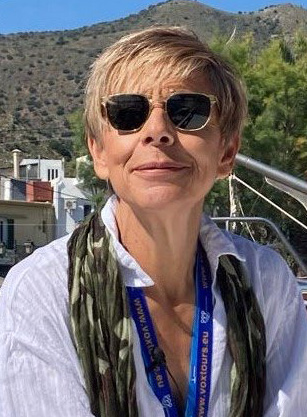
The role of the licensed tour guide is very decisive in the tourism sector, a sector particularly important for the Greek economy but
at the same time particularly sensitive and vulnerable to changes, conditions and challenges that may occur inside and outside Greece. Given this, I believe that as professionals we are ready to face them and to give our utmost with love and respect for the culture and tradition of our country, but also with responsibility towards our visitors. This is because, beyond training and experience, a primary concern is continuous education so that we are ready and able to cope with everything new, different and innovative.
– What are the advantages that Greece offers compared to other tourist destinations?
First and foremost its culture, the cradle of Western civilisation, the birthplace of letters, the arts and the sciences, as evidenced by the countless archaeological and historical sites and museums. The connection of the past with the present, the timelessness of our heritage, as expressed through theatre and music for example, our tradition alive in every encounter the foreign visitor has during their stay in our country, the gastronomy and the Greek cuisine so rich in flavours and ingredients, which can satisfy even the most demanding visitor, the natural beauty of Greece, a country so small in area yet so varied and complex, which we enjoy generously in different ways and possibilities. These are, in my opinion, some of the most important features and advantages of our land compared to other destinations.
– Are we "making the most of" our cultural heritage as we should, or do we still have a way to go in order to showcase our cultural wealth?
It is a truly complex issue because, as we have found judging by the results, the opinions expressed and the policies and practices applied are not only contradictory to one another, but often fragmentary and ineffective. In the modern era, the term exploitation is synonymous with profit, which appears to emerge as the main factor. Profit becomes the desired and opportunistic goal, with the result that protection and preservation, promotion and showcasing, the services and conditions offered, take second place and are often treated as outdated conditions that hinder future development and progress. We live in a country that is truly blessed for all the reasons I mentioned above, and we ourselves must first realise its value and reflect on the responsibility that falls to us, starting from the state, the involved bodies and stakeholders, and of course the citizens themselves. Personally, I believe that our cultural heritage should not be a product of exploitation, but rather the meaningful investment of all of us, with respect and consistency, as it truly deserves.
– What do visitors to our country want from their tours? What has changed compared to the past?
What has changed compared to the past is the way of travelling. In earlier years the majority of tourists visited Greece either by taking part in an organised trip with a specific programme as a member of a group, or through personal choices in shaping their itinerary.
In recent years there has been a major increase in cruising as a way of travelling, mainly due to its lower cost, with the result that the balance has shifted. Of course, we have observed that after the pandemic most people choose to travel as they did before, which was and is the goal, since when the visitor stays in the country, they can gain a genuine impression of the culture, the tradition and the beauties of Greece, and of course they contribute to the local economy.
Regardless, however, of the way they choose, the presence of the tour guide is truly decisive, whether it concerns the short-duration visits of a cruise or a multi-day stay. This is because, as professionals, we can discern and understand what the visitor really wants, what truly interests them, and we make sure to offer it in such a way that they take away the best possible impression.
After all, this is not a conclusion that comes from our side as tour guides but from the visitors themselves, who recognise our presence and contribution, the fact that through our own eyes and narratives they manage not only to learn about the past but also to connect it with the present of our land. To approach and understand not only the customs and traditions, but also the character and temperament of our people, the wealth, the variety and the quality of the products, which open up diverse gastronomic journeys and experiences.
It is this strong interpersonal relationship between guide and visitors that plays an essential role in the tourism–culture sector, in the image and promotion of the country, even in difficult and adverse times, a relationship that should be recognised and protected.
– Which sights are top of the list of preferences, and from which countries do we receive the largest share of visitors?
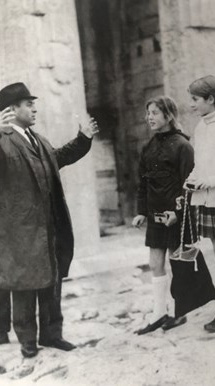
IN 1925 THE ASSOCIATION OF GREEK TOUR GUIDES WAS FOUNDED, THE FIRST PROFESSIONAL ASSOCIATION OF TOUR GUIDES IN GREECE, BASED IN ATHENS, WHICH SERVED TO PROMOTE THE PROFESSIONAL RIGHTS AND THE TRAINING OF ITS MEMBERS.
IN 1957 THE ASSOCIATION OF PROFESSIONAL GREEK TOUR GUIDES WAS FOUNDED, WHICH WAS RENAMED IN 1962 THE ASSOCIATION OF LICENSED TOUR GUIDES THROUGH AN AMENDMENT OF ITS STATUTE, WHICH HAS REMAINED ESSENTIALLY THE SAME EVER SINCE.
The largest share of visitors comes from the United States, while from Europe the top three, I would say, are the French, the Germans and the Spanish. Satisfactory, though as we have seen in recent years variable, rates of visits come from Asia and Latin America.
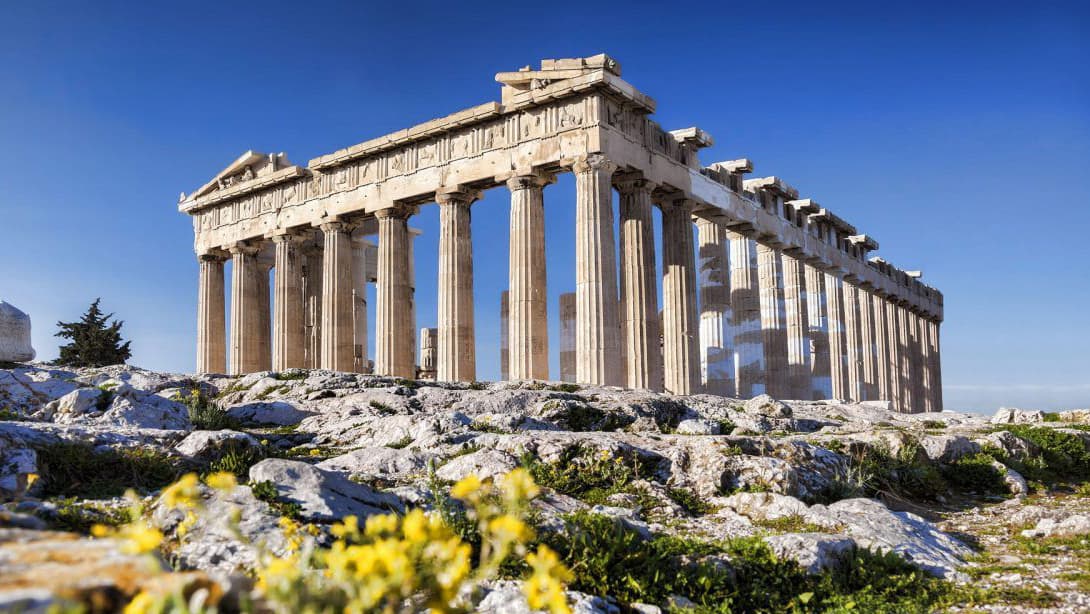
Based on the nationalities we mentioned as having the highest rates of visits and on their choices in the field of cultural, sightseeing and pilgrimage tourism, the sights that top the list of preferences are: at the very top the Acropolis with the Acropolis Museum and the National Archaeological Museum, the archaeological sites of Delphi, Olympia, Mycenae and Epidaurus, the monasteries of Meteora, as well as the archaeological sites of Vergina and Philippi.
In recent years we have found that our city has become a popular destination with a large share of visitors, whether they choose it for a multi-day stay or even if they stay only a few days, a circumstance that allows them to get to know it better and to appreciate it for what it offers.
With this in mind, beyond the Acropolis and the important museums of the city, we professional tour guides also have the opportunity to showcase other aspects of Athens that are not so well known either to foreign or to Greek visitors, such as the Byzantine medieval monuments and the more recent and contemporary history of the city.
For example, recently, through walking programmes, we have been showcasing the more recent architecture through the movement of neoclassicism, whether it concerns private or public buildings, such as the exceptional Athenian Trilogy, the architectural jewel of our city centre: the Academy, the University and the National Library. Each of them individually, but also all three together as a whole, stand out as the result of the inspiration of well-known Greek and foreign architects, the result of the work of pioneering and highly skilled artists and craftsmen, the result of the contribution, dedication and persistence of important figures, in times that were difficult and adverse in their historical, political and social context.
Within these conditions, in the late 19th and early 20th centuries, the city of Athens was adorned with buildings of exceptional beauty and elegance, which not only served specific and necessary purposes but became landmark spaces – symbols, serving timelessly the preservation, protection and progress of culture, letters and the arts.
– What studies does a young person need to undertake in order to pursue the profession of tour guide?
The profession of tour guide, which is legally and institutionally established, presupposes and is defined through a specific educational framework. To begin with, I would say, as an observation and a piece of advice to those thinking of pursuing it, that a very good command of more than one foreign language is essential, and preferably one of them should be among the so-called rare languages.
The study options available today are the School of Tour Guides and the so-called Two-Month Training Seminars.
The School of Tour Guides is state-run; it is open to high-school graduates and to graduates of university faculties, particularly in classical studies and archaeology. In earlier years admission was by examinations, initially in the foreign language(s) and then in specific subjects, whereas now admission is by submission of language proficiency certificates and a points-based system, while, as we have proposed, there should at least be examinations in this area, because it is a profession in which knowledge of the language is primary and fundamental. If someone obtained a relevant degree some years ago, it does not mean that they possess or command the language to the degree the nature of the profession requires. Studies at the School last about two years, with classes and field trips. Unfortunately, in recent years we have observed a downgrading of the Schools and, worse, a dramatic reduction in the hours of educational field trips, which are the essential part of training beyond the classes. The field trips are the training in the field, which prepare us for the practical exercise of guiding services, both for presentation and narration and for the practical matters we will be called upon to handle.
In recent years the second option has been through the two-month intensive seminars aimed at graduates of university faculties (mainly classical studies – history and archaeology), organised by universities that express interest and with a participation fee set by the organising university body.
I would like to point out, however, that beyond the options, education is the primary point of reference, it is the cornerstone, and in this the state must invest in order to prepare the professionals of the sector properly and reliably, but equally important and imperative is continuing education, because it shapes the conditions for the challenges of the future. In closing, I would like to thank you from the heart for your hospitality, and I would like to end with the hope that all of us should strive for the best with respect and love for what we serve and offer.
Interview with: Vasilis Babaolous General Director of Arcus Real Estate