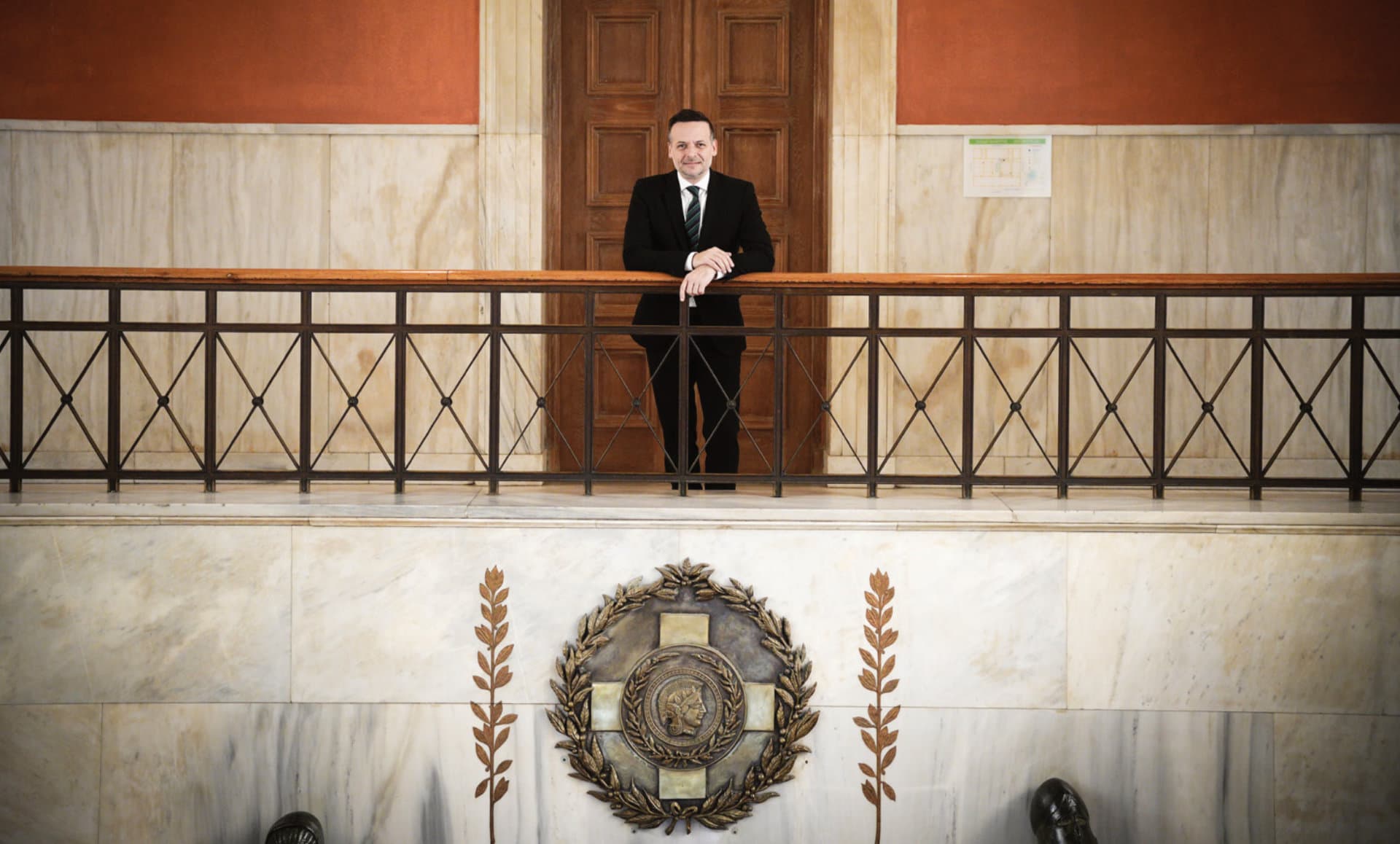
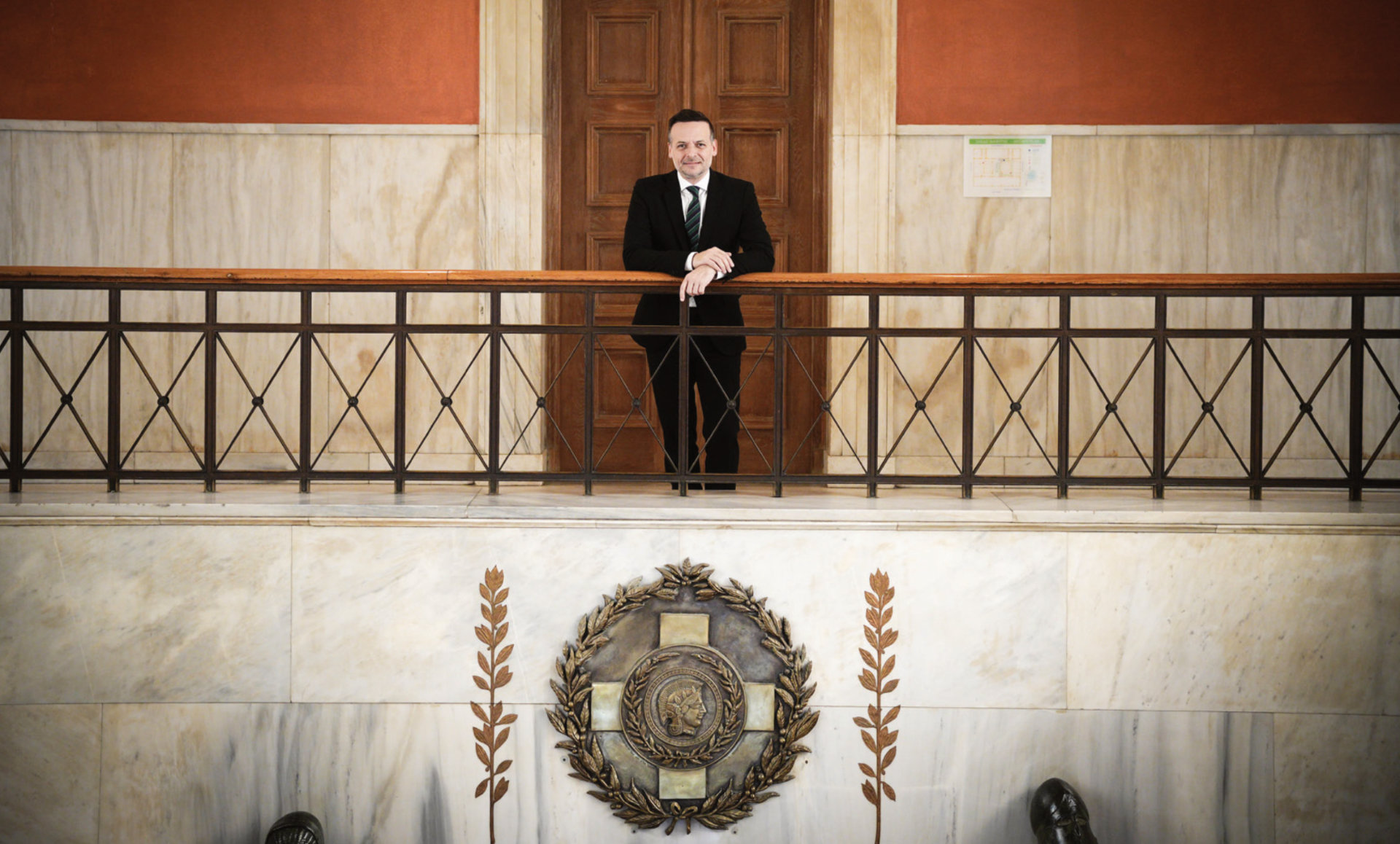
Interview with Charis Doukas – Mayor of Athens
January 12, 2026 · Arcus Real Estate
How much has the quality of life improved in the Municipality of Athens?
 With every passing day we move closer to our goal, which is a sustainable, green and human Athens. I believe the citizens feel this too. From medical services and cleanliness to accessibility and culture, we are working to make life easier and better for residents.
We place particular emphasis on Health, having strengthened our free medical services with six municipal clinics upgraded into multi-purpose facilities, as well as special support programmes for the elderly, such as "Frontizo" and the Memory Clinic.
We respect and implement the "Green Social Contract" that we have signed with the citizens. Through hard work, we secured Athens' inclusion in the Mission of 110 European cities aiming for climate neutrality by 2030. We are increasing greenery in the city, planting 5,000 trees annually and creating microforests, while protecting it with major flood-defence works worth 20 million euros, beginning in Rizoupoli.
At the meeting of the Athens Energy Alliance that we organised, 45 municipalities, representing more than 40% of Greece's population, signed a resolution calling for national legislation that facilitates the establishment of Energy Communities by local authorities and ensures cleaner, fairer energy access for all.
The C40 cities network for the climate recognised that Athens is a prominent example of how local leadership can influence decision-making, removing barriers to urban climate action and prioritising those who need it most. This is precisely the role of the Energy Poverty Relief Office, through which we exempt our energy-vulnerable fellow citizens from municipal levies.
We want Athens clean. We have installed 100 underground compaction waste-bin systems, expanded composting, and brought the Waste Transfer Station into full operation.
Our priorities also include transforming Athens into an inclusive city, where people with disabilities and those with mobility difficulties can move around and be served on equal terms. To this end we have upgraded more than 12,700 sq.m. of pavements, installed 188 new accessibility ramps and are planning 40 pedestrianisations.
We want play in the city to be as safe as possible. We carried out reconstruction works on 16 playgrounds in 2024 and completely renovated 11 in the first months of 2025, while we continue creating new play and sports spaces.
At the same time, we are advancing the city's digital modernisation. We have made citizen services more efficient and immediate by integrating artificial intelligence into the Municipality's main website, also offering voice-search functionality.
We place particular weight on culture too. Citizens can take part free of charge in a series of artistic events that run throughout the year, the flagship being the Athens Municipality Festival, which includes more than 200 events with free admission across all the city's neighbourhoods.
What are your next goals for the development of the area?
Our priority remains the development of sustainable tourism and, by extension, sustainable investment, always guided by minimising environmental impact and improving the quality of life for residents and visitors alike.
Athens is the first European capital to have produced a Tourism Carrying Capacity Study and to take preventive action before facing the problem of overtourism. This study formed the basis for creating and developing the Tourism Observatory, which has helped us collect real-time data about the city, enabling us to shape forecasting and management strategies and to strengthen sustainability.
Our goals for the city's development also include: upgrading the urban environment through infrastructure projects, such as the reconstruction of pavements and squares; strengthening local entrepreneurship; and promoting innovation and the digital transition so that Athens can earn the title of "smart city". At the same time, through the Athens Film Office, we have made Athens an international destination for television and film productions that advertise our city abroad and create new jobs.
Finally, the Convention and Visitors Bureau (This is Athens – CVB) of the Athens Development Agency attracts a range of international scientific and commercial congresses, incentive trips, exhibitions, seminars and meetings. Indeed, Athens today ranks 8th among the world's most attractive destinations for events and meetings, according to the assessment of the International Congress and Convention Association.
A dramatic rise in property prices has been recorded. How have prices in Athens developed and how are you managing the situation?
This year, 10 million people are expected to visit Athens. This enormous number of visitors is leading to a continuous increase in short-term rental accommodation and a decrease in homes available for long-term rent or purchase. This means that rents and sale prices are skyrocketing accordingly. Tellingly, seven neighbourhoods around the historic centre, including Koukaki and Mets, are on the verge of oversaturation.
For us, housing is not Real Estate but a social good. That is why we have launched two housing programmes. We subsidise rental costs for vulnerable young people who are beneficiaries of the Guaranteed Minimum Income, as well as the renovation of 70 homes that will house vulnerable households. In addition, we are preparing the first social apartments in the Omonoia area at low rents.
The intensity of the housing problem across Europe demands immediate measures that will significantly increase the supply of affordable housing.
Today's model must change now. Bold public policies are needed. This is precisely why I am taking part in the "Mayors for Housing" initiative alongside my counterparts from across Europe, advocating, among other things, for municipalities to be recognised as key partners in implementing housing programmes.
Are investments being made in the area, and how do you envision the future?
Significant investments are under way, covering a broad spectrum of projects from urban regeneration to the creation of green spaces. I will mention a few examples, such as the redevelopment of Filopappou Hill, for which the Municipality secured funding of 2,011,280 euros from the Green Fund.
Of course, one of our largest and most emblematic projects is the Double Regeneration in Votanikos. A holistic intervention that radically changes the character of a degraded area and transforms it into a hub of development in the heart of Athens. We are creating green spaces, rain gardens, the largest urban park in Athens covering 215 acres, cycle paths, as well as major infrastructure and road works.
A key pillar of the project is the construction of Panathinaikos' new stadium, with a capacity of up to 40,000 seats. With modern facilities and high safety standards, we aspire for it to become a point of reference for fans and a driver of development for the surrounding area. Panathinaikos, one of the country's most historic and beloved clubs, finally gains the "home" it deserves.
The project is progressing, the vision is taking shape. The regeneration of Votanikos is not merely a project, but the beginning of a new era for Athens.
What would you like to improve in the lives of citizens that you have not yet managed to achieve?
I often say that the only battle lost is the one that was never fought. And the truth is that we fight every day to improve the daily lives of our citizens with every means at our disposal.
We fought over the height of buildings, since our city can take no more concrete, appealing to the Council of State over the New Building Regulation, and we were vindicated. We managed to have the decision to impose an increase in the waste-burial levy revoked, which would have financially crippled the municipalities, and we set in motion the imposition of rules on the use of electric scooters abandoned in our city's public spaces.
However, unlike other European states, our municipal authority does not have the power to decide on all matters affecting life in our city. This means that local government needs to be strengthened with resources and competences, as well as closer and more effective cooperation among all bodies and levels of governance.
Interview by: Vasilis Bambaoulos General Manager of Arcus Real Estate