
Interviews
Interview with Thanos Tsoulkanakis – President, Thessaloniki Estate Agents' Association
November 19, 2026 · Arcus Real Estate · 7 min read

The President of the Thessaloniki Estate Agents' Association, Mr Thanos Tsoulkanakis, talks to ESTATE about the momentum of the property market, investment opportunities, the digital transformation of the sector and Thessaloniki's prospects as a modern investment destination.
What is Thessaloniki's position today as an investment location in Greek real estate?
Thessaloniki is currently in one of its strongest investment positions of the past decade in the Greek property market.
Interest from both Greek and foreign investors is particularly strong. Traditionally, a significant share of buyers have come from the Balkans, Turkey and Israel, while recently there has also been growing interest from investors in Asian countries.
After the pandemic, Thessaloniki became even more outward-looking and better known in the European market for its energy, its food, its nightlife and the overall quality of life it offers.
At the same time, the presence of around 120,000 students has long created strong demand for housing, while the growth of tourism has led to new hotels and short-term rental accommodation.
Also particularly significant is the rise of so-called digital nomads, people who work remotely for large international companies and choose to live in Thessaloniki, further boosting demand for quality housing.
Meanwhile, large multinational companies setting up in the city have created greater need for modern office space and logistics facilities.
All these factors have produced a particularly positive investment environment, making Thessaloniki one of the most attractive destinations for investment in the Greek property market.
As President of the Thessaloniki Estate Agents' Association, what do you see as the greatest challenges facing the sector today, and how are you trying to address them?
The challenges facing the sector today are many and particularly complex, as in recent years the estate agency profession has entered an entirely new era, dominated by digital transformation.
The years of the bailout memoranda and, after that, the pandemic radically changed the way the property market works, as well as what clients expect.
The most significant problem we face concerns the institutional framework governing the profession. The current law, introduced in 2012, has major weaknesses and no longer meets the needs of today's market.
As a result, people without the necessary training or professional education are active in the field, which leads to distortions, inaccurate property valuations and practices that ultimately damage the image of the profession. Another particular challenge is developing a genuine culture of cooperation among professionals, in line with the international standards applied in the most mature property markets.
Education is an equally important issue. The Thessaloniki Estate Agents' Association, with a history of more than a century, has made the continuous professional development of its members a key priority, through new training programmes and information initiatives.
Proper training, professional ethics and constant adaptation to new developments are, for us, essential conditions for the future of the profession.
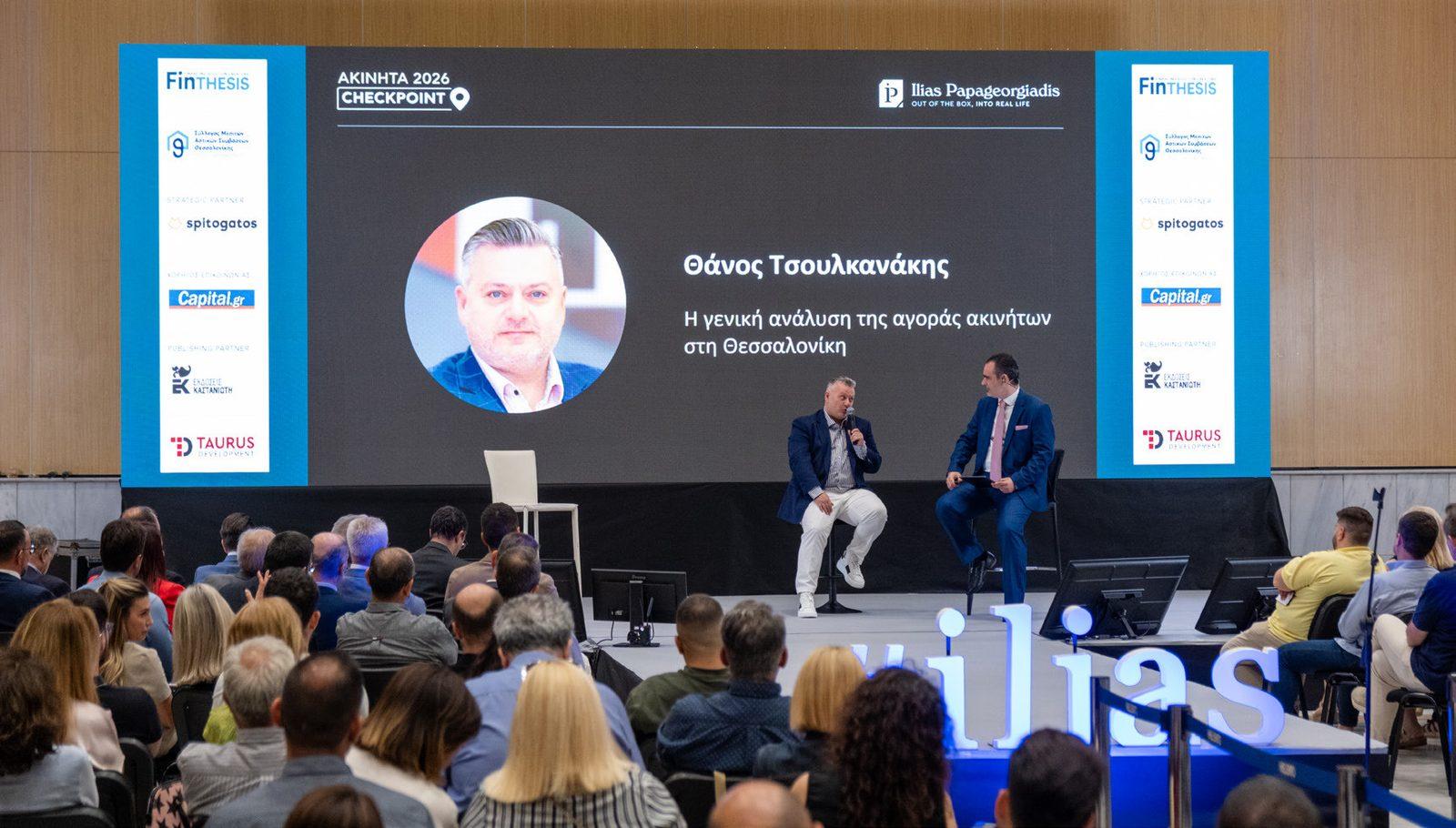
Which indicators best reflect the momentum of the Thessaloniki property market today?
The picture of the market is particularly positive, and this is reflected in a series of objective indicators.
There has been a significant increase in the number of sales, which translates into higher turnover and a boost to overall economic activity around real estate.
At the same time, there is intense construction activity, with more new builds as well as a significant increase in renovations of existing properties.
Hotel investment is also growing particularly strongly, while demand for modern office space and logistics facilities remains high.
All these indicators confirm that the Thessaloniki property market is on a growth path and is making a real contribution to the city's overall economic development.
What are the main problems estate agents face today, and how are they adapting to the constant digital changes in the market?
The greatest challenge facing the estate agency sector today is still the lack of a modern and effective institutional framework. As we have already pointed out, legitimate, well-organised agencies have to compete every day with people operating outside the established rules, which creates conditions of unfair competition.
Professional estate agencies have invested heavily in staff, modern premises, technological equipment and organised services in order to meet the demands of today's market.
At the same time, digital transformation has radically changed the way real estate works. Online marketing, specialist listing platforms, professional photography, 3D renderings, virtual property tours and strategic social media management are now an integral part of daily life in a modern estate agency.
Technology allows us to communicate directly with investors and buyers all over the world, to market properties more effectively and to offer faster, better service.
One could say that a whole new ecosystem of professions and digital services has now formed around real estate, one that is constantly evolving and raising the standard of the sector as a whole.

There are frequent references to a lack of transparency, overpriced listings and questionable practices in the market. How does the Association deal with these issues, and why should the public trust a professional estate agent?
The need for greater transparency in the property market is more pressing today than ever.
Overpriced listings and inaccurate valuations are something we come across often, and they create confusion for sellers and buyers alike.
For this reason, the Thessaloniki Estate Agents' Association is setting up its own Price Observatory, an initiative that will make a real contribution to building a more reliable picture of the market.
Data and analysis by area, property age and category will be published regularly, giving the market an objective view of the trends.
It is an important information tool, not a price list. The true valuation of a property is always based on specialist knowledge, specific methodologies and the experience of a certified professional.
The public has every reason to trust a professional estate agent, because they have the knowledge needed to guide both seller and buyer to the right deal, with security, transparency and a realistic valuation of the property.
Which areas of Thessaloniki are showing the strongest growth today, and what are the main reasons behind this?
The area attracting the most investment interest today is undoubtedly the western entrance to Thessaloniki.
A particularly dynamic development process is under way there, with major land purchases by large investment groups and new projects that are gradually transforming the face of the area.
Major hotel investments, modern offices, new homes and mixed-use developments are being built a short distance from the city centre, upgrading the western urban corridor as a whole.
At the same time, interest in the eastern suburbs and the historic centre of Thessaloniki remains consistently high, particularly in the residential market, as these areas are still a first choice for residents and investors alike.
This shows that the growth of the property market is no longer confined to specific parts of the city, but is becoming more widespread, creating new investment opportunities across the entire metropolitan area.
What is your forecast for the Thessaloniki property market over the next two to three years?
The outlook for the Thessaloniki property market remains positive, although I believe we are now entering a period of more balanced growth.
The city continues to attract residents both from the Greek regions and from abroad, which keeps demand at high levels. Thessaloniki also remains a particularly attractive destination for investors interested in student housing, as well as in investments linked to the Golden Visa programme.
As a result, I believe property values will continue to rise. However, we do not expect the steep rates of increase of previous years, when prices were rising by 10% to 15% a year.
The picture emerging today points to a more mature and more stable market, where increases will be more moderate and will be concentrated mainly in the areas attracting strong investment interest.
In addition, major infrastructure projects such as the extension of the Metro, along with the use of public and private investment, are expected to further strengthen the city's momentum.
A particularly positive sign is that Thessaloniki's institutional bodies are now working together more than ever, putting forward joint proposals and pressing for solutions that will support the sustainable growth of the market.
Would you encourage a young person today to pursue a career in real estate?
Without a doubt, yes.
Real estate is a particularly dynamic and creative sector that offers significant career prospects to those who are willing to invest in themselves and work consistently.
It is a field where no two days are the same. Every new collaboration, every negotiation and every property is a different challenge, which makes the profession extremely interesting.
At the same time, it is a sector that can offer substantial financial rewards and great scope for personal development. However, it is not an easy career choice.
The reality is that many young people give up in their first years because they underestimate what the profession demands. To succeed, you need hard work, continuous learning, patience, perseverance and a willingness to learn from experience every day.
I believe that those who have character, a strong work ethic, method and ambition can build an extremely successful career in real estate.
Interview by: Vasilis Babaolous
General Manager of Arcus Real Estate